
Your eyes adjust to everything from your phone screen to oncoming headlights, all day long. Most of us don’t think about our vision until something feels off. But some eye conditions develop for years before they cause any symptoms, so the habits you build today can affect how well you see later in life.
Our optometrists track how your eyes change over time, from your child’s first eye exam through your adult and senior years. You can help protect your vision with regular eye exams, healthy screen habits, UV protection, a balanced diet, and a few changes to your everyday routine.
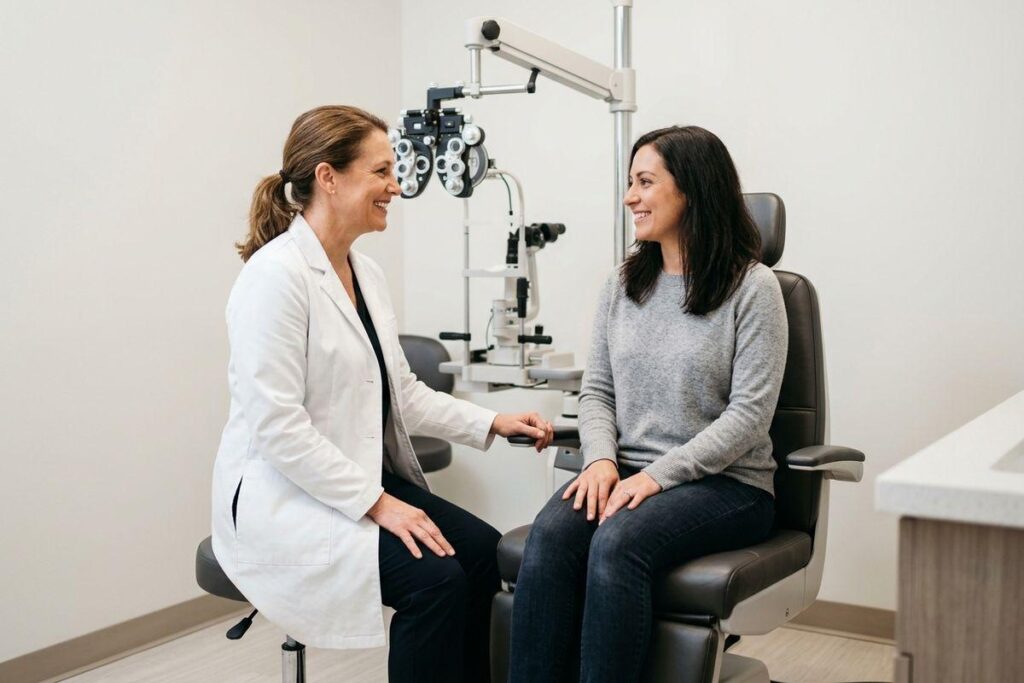
1. Book Regular Eye Exams
Glaucoma can damage your optic nerve for years before you notice any vision loss. Your optometrist can look for early signs of it during a comprehensive exam, and early treatment can help slow it down.
Eye exams can also reveal clues about your overall health. Changes in the tiny blood vessels at the back of your eye may point to diabetes or high blood pressure, sometimes before you notice other symptoms.
Ask your optometrist how often you should come in, since the answer depends on your age and eye health.
2. Follow the 20-20-20 Rule for Screen Time
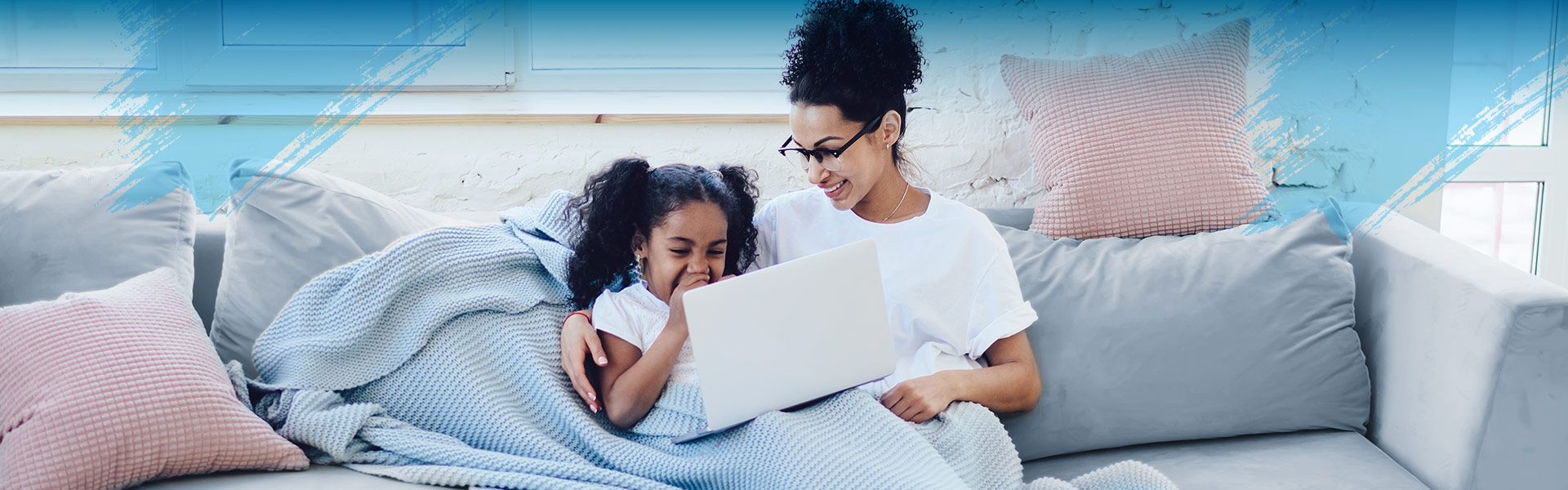
Hours on a screen can lead to digital eye strain. You blink less often when you focus on a screen, which can leave you with symptoms like:
- Dry eye
- Headaches
- Blurry vision
- Neck and shoulder pain
Try the 20-20-20 rule: every 20 minutes, look at something 20 feet away for 20 seconds. Set your screen about an arm’s length from your face, and close the blinds if sunlight creates glare.
3. Get Your Kids Outside Every Day
Kids who spend more time outdoors may have a lower risk of developing myopia, which is the medical term for nearsightedness. Time outside may also help slow myopia in kids who already have it.
Encourage outdoor play after school and on weekends. If your child already wears glasses, ask your optometrist whether myopia control could help slow their prescription changes.
4. Wear Sunglasses Year-Round
UV rays can affect your eyes in every season. Over time, too much exposure can raise your risk of cataracts and macular degeneration.
When you shop for sunglasses, look for:
- 100% UVA and UVB protection
- Lenses that screen out 75% to 90% of visible light
- Wraparound frames if you spend a lot of time outdoors
- Impact-resistant polycarbonate lenses for sports
Kids need sunglasses too, since they often spend more time in the sun than adults do. Our opticians can help you find sunglasses that fit your child’s face and the activities they love.

5. Eat Foods That Support Your Eyes
Leafy greens like spinach and kale contain lutein and zeaxanthin, nutrients that can help protect your macula. Your macula is the part of your retina responsible for sharp central vision. Fatty fish like salmon and tuna give you omega-3 fatty acids, which may support your retina.
Toss a handful of spinach into a smoothie, or have grilled salmon for dinner once a week.
Cut back on added sugar, especially if you have diabetes, since high blood sugar can affect your eyesight.
6. Drink Water & Get Enough Sleep
Your tears are mostly water, so dehydration can leave your eyes feeling dry and irritated. Keep a water bottle at your desk or in your bag, and drink throughout the day, especially in hot weather.
Sleep affects your eyes as well. When you don’t get enough rest, you may notice your eyelids twitching throughout the day. Set a regular bedtime and put your phone away a little earlier.
7. Keep Your Contact Lenses Clean
Poor lens habits can raise your risk of eye infections, so follow these steps every day:
- Wash and dry your hands before you touch your lenses
- Rub and rinse your lenses with disinfecting solution, never water
- Store your case upside down with the caps off
- Replace your case at least every 3 months
- Remove your lenses before you shower or swim
Skip sleeping in your contacts unless your optometrist has approved them for overnight wear. Sleeping in lenses can raise your risk of infection, even if you only do it once in a while.
8. Quit Smoking for Healthier Eyes
Smoking can raise your risk of serious eye conditions like macular degeneration and cataracts, and both can lead to vision loss. Quitting can help lower that risk at any age.
Let your optometrist know if you smoke or used to smoke so they can watch for early signs of these conditions during your exams.
9. Wear Protective Eyewear for Sports & Projects
About half of all eye injuries happen at home, often during yard work and home repairs. Wearing protective eyewear can reduce your risk of eye injury by about 90%.
Keep a pair of safety glasses with your tools, and put them on before you mow the lawn or use a power trimmer. For basketball and racquet sports, choose sports goggles with polycarbonate lenses.
10. Know Your Family’s Eye Health History
Some eye conditions run in families. A family history of glaucoma raises your risk, especially if a parent or sibling has it.
Ask your relatives about any eye conditions they’ve been diagnosed with, then share what you learn at your next appointment. Your optometrist can use that information to decide which tests you need and how often to monitor your eyes.
Healthy Vision Habits for Your Whole Family
Most of these tips fit into routines you already have, whether that’s packing sunglasses for soccer practice or setting a screen-break reminder at work. Regular eye exams can help your optometrist see how your eyes change over time and update their advice as you get older.
At Total Vision Hercules, our optometrists get to know your family’s eye health history and can recommend habits that fit your life. Book an appointment and give your eyes the care they need at every age.