

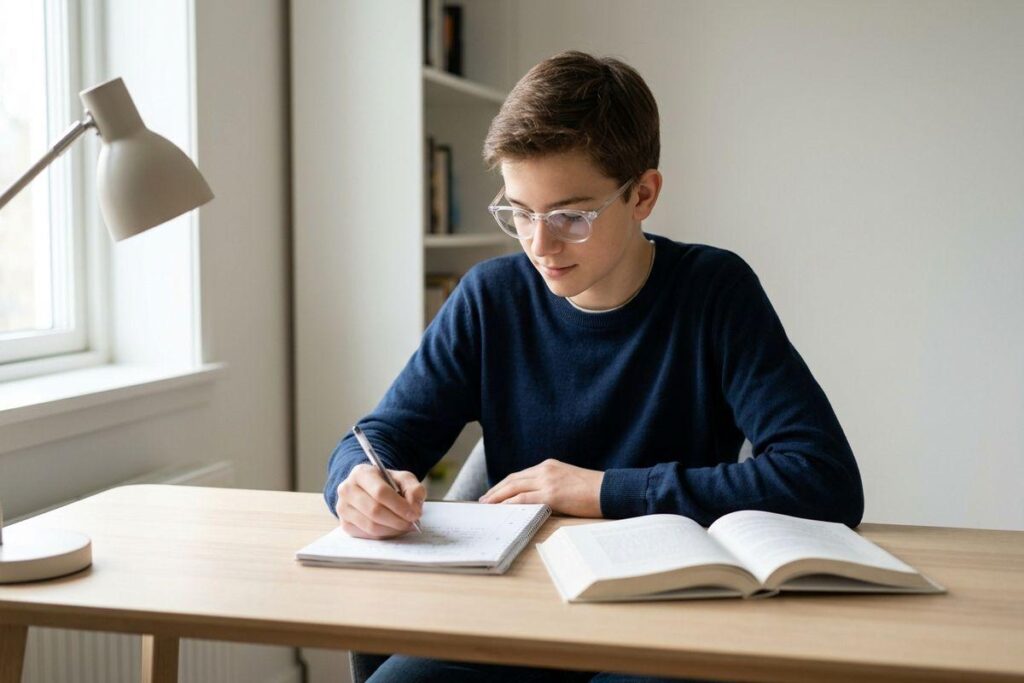
Blurry vision doesn’t just make the whiteboard hard to read. It can throw off your teen’s game on the field, make driving stressful, and chip away at confidence in ways that aren’t always obvious. When these issues go uncorrected, they pile up fast.
Myopia, or nearsightedness, is common in teens and tends to get worse throughout the teen years, which is why routine eye exams matter more now than they will later. Both glasses and contacts work well for teens, and the right pick comes down to your teen’s lifestyle, maturity, and what a comprehensive eye exam turns up. Let’s break down what each option actually looks like day to day.
Why Glasses Are Worth Considering
Glasses are the tried-and-true option, and for good reason. Here’s what makes them work well for teens, and where they can fall short.
What Makes Glasses a Reliable Option
Glasses are simple. Your teen puts them on in the morning and takes them off at night, with no insertion routine, no solution, and no extra steps before bed. For a teen juggling a packed schedule, that simplicity counts for a lot.
Polycarbonate lenses, standard in most teen frames now, hold up well against impact. They’re a solid fit for active kids who don’t want to think twice about their eyewear.
If your teen’s prescription changes, updating a pair of glasses takes just a few days. You can browse frames and lenses to get a feel for the styles and options out there.
Where Glasses Can Fall Short
Glasses aren’t perfect for every situation. They can slip during sports, fog up in the cold, or break at the worst possible moment.
Some teens feel self-conscious wearing them, especially around friends. And frames that don’t fit quite right can cause pressure behind the ears or on the nose after a long day.
It helps to know how glasses should fit so your teen isn’t stuck with discomfort that’s easy to avoid.
Why Contacts Are Worth Considering
Contacts can solve a lot of the problems glasses create, but they bring their own set of considerations.
Where Contacts Have an Advantage
For teens who play sports or spend hours outside, contacts offer a kind of freedom glasses can’t match. There’s no frame blocking peripheral vision, nothing sliding down mid-game, and nothing fogging up on a cold morning.
Plenty of teens also just prefer how they look without visible eyewear. At this age, that confidence boost is worth something.

What to Think Through Before Switching
Contacts come with real responsibilities. Here’s what your teen needs to commit to:
- Wash hands thoroughly before handling lenses
- Stick to the replacement schedule, whether that’s daily, biweekly, or monthly
- Never sleep or nap while wearing lenses
- Swap out lens cases and solution regularly to avoid contamination
Skipping these steps can lead to eye irritation or infection. It’s not complicated, but it does require daily follow-through without anyone standing over their shoulder.
How to Know If Your Teen Is Ready for Contacts
Age isn’t really the deciding factor. What matters is whether your teen can manage a daily routine on their own.
Most optometrists feel comfortable recommending contacts around age 12 or 13, but readiness varies from teen to teen. If your teen already handles things like these on their own, they’re probably ready to handle contact lens care too:
- Keeping up with homework without regular reminders
- Managing their own hygiene routine
- Following through on daily responsibilities without much prompting
Stay involved early on. It makes the transition smoother for everyone.
Choosing the Right Lens Type
For teens new to contacts, daily disposables make a practical starting point. Toss the lens at the end of the day, and skip the cleaning routine altogether.
Monthly lenses can work well for teens who stay consistent about cleaning and storage. Ask about silicone hydrogel lenses too. They let more oxygen reach the eye than older materials, which can make longer wear more comfortable.
Look into the different contact lens types before your teen’s fitting appointment so you both walk in prepared.
Ready to Help Your Teen See Clearly? Here’s the Next Step
A contact lens fitting is a separate appointment from a standard eye exam. It measures the surface of the eye and checks whether a specific lens type suits your teen’s eyes and habits.
Keep a pair of glasses on hand no matter which option your teen tries. If a lens tears, runs out, or causes irritation, backup glasses mean the day doesn’t have to stop.
Talk to the team at Total Vision Hercules to weigh your options and find what fits your teen’s vision and daily life. Schedule an appointment and get your teen’s eyes checked with confidence.