

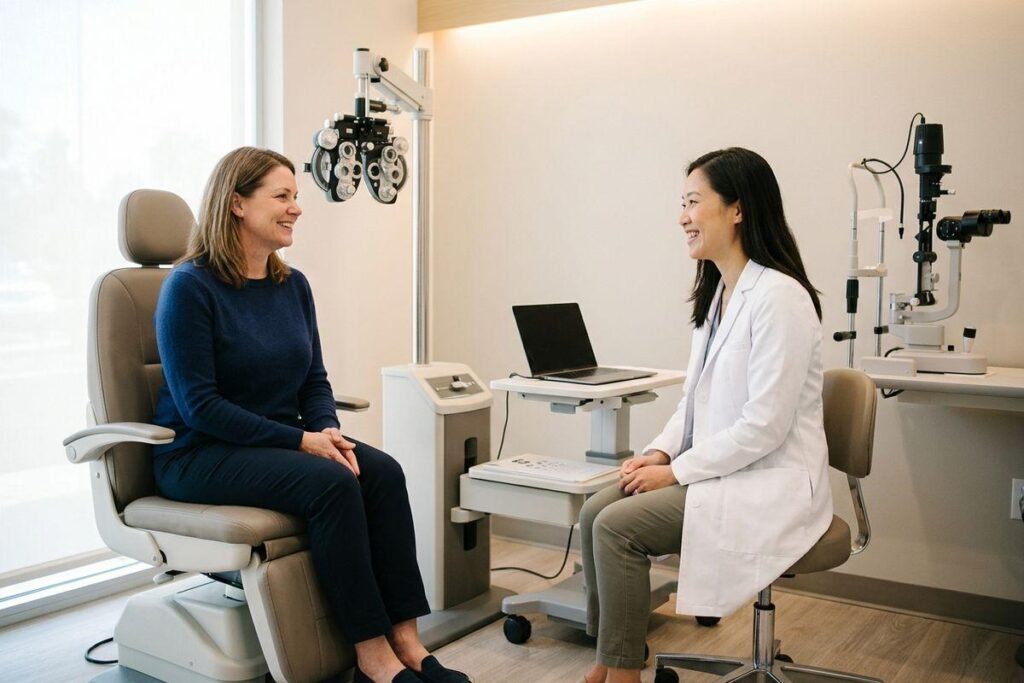
Most people picture the letter chart when they think about an eye exam. That test takes about a minute. The rest of your visit with our optometry team covers ground you might not expect, from the pressure inside your eyes to the health of the nerve sitting behind them.
An eye exam is a series of targeted tests that measure how clearly you see and check your eye health from the front surface all the way to the back. Some tests are quick and familiar. Others use equipment built to look at structures you’d never spot in a mirror. The right schedule for exams depends on your age and health history, so no two patients follow the same routine.
What Happens at the Start of an Eye Exam
Before any equipment comes out, your optometrist will ask about your health history and the medications you take. Blood pressure drugs, antihistamines, and plenty of others can affect how your eyes feel and function.
Bring up anything you’ve noticed since your last visit. Trouble with small print at night, headaches that show up after work, one eye that seems weaker than the other. Those details shape which tests we run and how much time we spend on each one.
Bring your current glasses or contacts, too. Comparing an old prescription against your new numbers tells us how much has changed and how quickly.
Tests Included in a Comprehensive Eye Exam
A standard exam moves through several tests, and most take a minute or two each:
- A visual acuity test, where you read letters off a chart at a set distance
- A refraction test that narrows down your prescription one lens comparison at a time
- An eye pressure reading, taken with a puff of air or a light touch to the surface of the eye
- A pupil response check, done with a small light
- A visual field test that maps how much you see off to the sides
Depending on what you tell us at the start, we may add color vision testing or a closer look at how well your eyes focus up close. We may also use dilation drops that widen your pupils for a clearer view of the retina and optic nerve.
What the Vision Tests Measure
Visual acuity is the one everybody recognizes. You cover one eye and read down the chart, then switch sides. It measures how clearly each eye sees at a distance, and it’s where the 20/20 number comes from.
Eye tracking gets less attention. These tests show how well your eye muscles coordinate and whether both eyes stay locked on the same point, which affects reading and depth perception. That’s one reason a full exam runs longer than a quick vision screening at school or the DMV.
Tests That Look Inside Your Eye
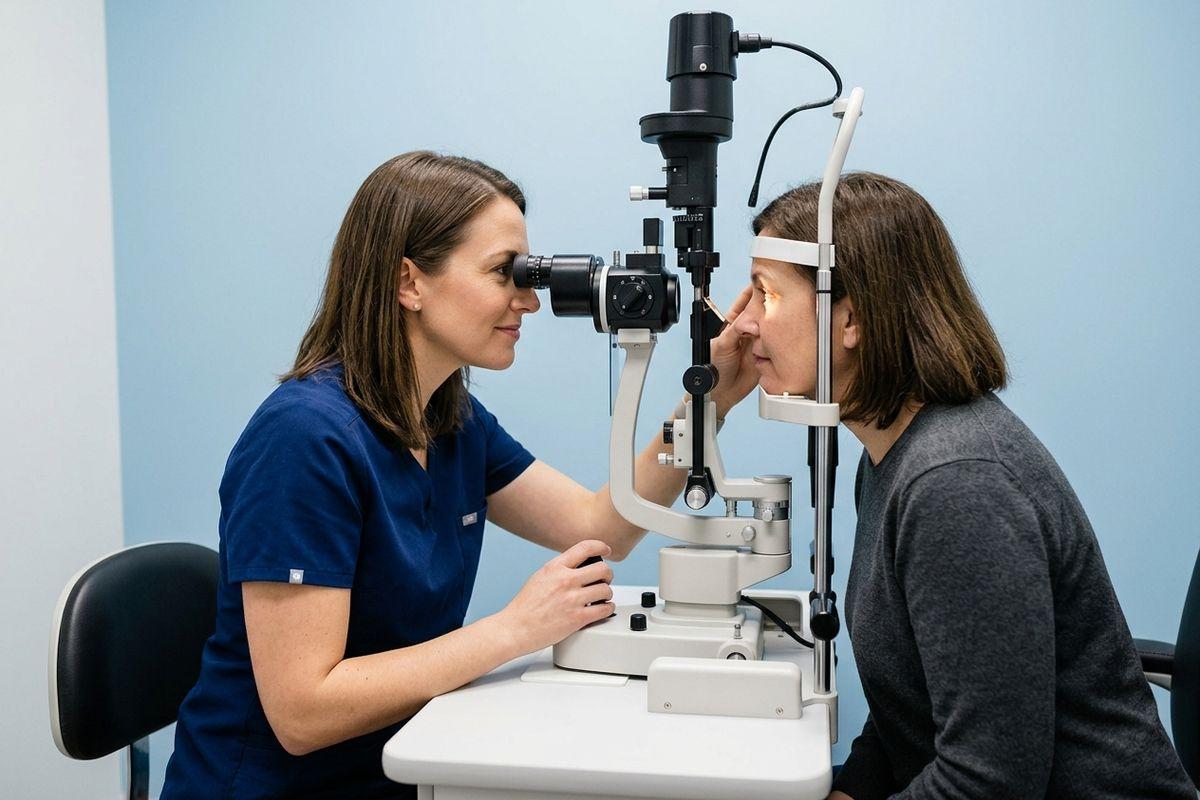
A slit lamp is a microscope paired with a bright, narrow beam of light. Your optometrist uses it to examine the cornea, lens, and eyelids at high magnification, which can bring small changes into view long before you’d feel them.
Pressure testing screens for signs of glaucoma. Dilation opens up the view of the retina and the optic nerve behind it.
When something warrants a closer look, optical coherence tomography can produce cross-section images of the retina and show each layer separately.
Do All Eye Exams Check for Glaucoma?
Pressure readings and peripheral vision testing are standard in a comprehensive exam, and both support glaucoma screening. That matters because glaucoma tends to develop quietly, with no pain and nothing obvious to notice at home.
Regular exams can identify those changes before they affect your day-to-day vision.
If glaucoma runs in your family or your pressure comes back higher than expected, your optometrist may recommend more testing. Corneal thickness measurement is one option, and it adds context to pressure numbers that can otherwise be misleading. We handle that follow-up through our eye disease diagnosis and management services.
How Often You Should Get an Eye Exam
Children need regular screenings while their vision is still developing, since an untreated problem can affect learning and coordination. Exams for kids start earlier than most parents expect and look a little different from an adult appointment. They should come in each year while they’re at school so we can keep up with any changes.
Adults under 40 with healthy eyes and no risk factors often go 1 to 2 years between exams. From 65 on, the general recommendation is every year, since age brings changes worth monitoring closely.
When to Schedule Sooner
Certain health conditions like diabetes and high blood pressure can affect your eyes, so more frequent exams may be appropriate. A family history of eye disease is another reason to stay proactive. If you notice sudden changes in your vision, new floaters, or eye pain, don’t wait for your next scheduled visit.
What Happens After Your Eye Exam
Your optometrist will walk you through the findings and any changes to your prescription. Ask questions here. This is where a page of numbers turns into something you can act on.
If your eyes were dilated, expect some light sensitivity for a few hours. Sunglasses help. Consider planning for someone else to drive you home afterward. You’ll also leave with a follow-up schedule based on what your exam found.
Schedule Your Next Comprehensive Eye Exam
At Total Vision Hercules, we take the time to explain what we found and what it means for you, so you leave knowing where your eye health stands.
If it’s been a few years since your last exam, or the whole family is due, book an appointment and get a clear read on how your eyes are doing.